

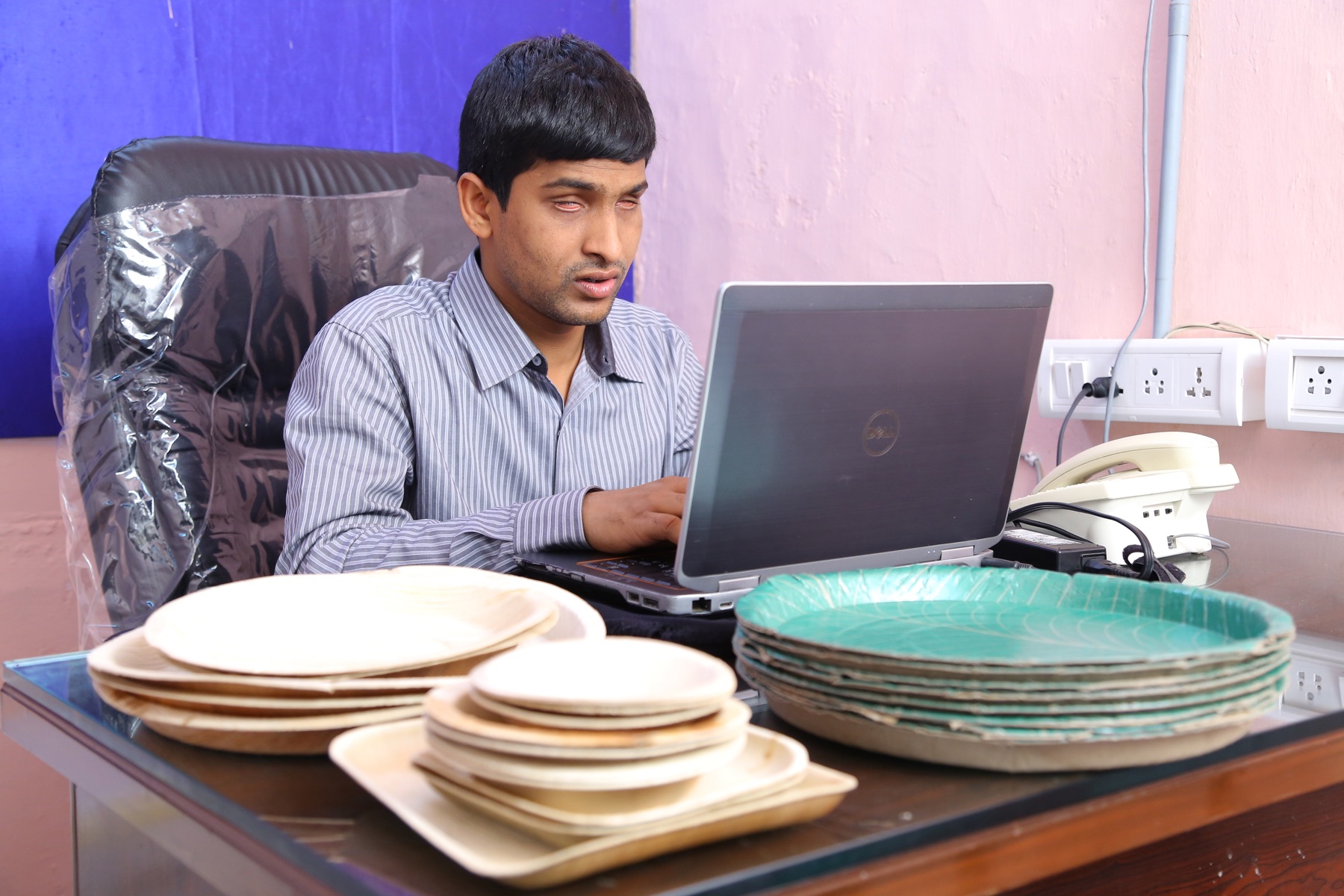
Buy areca leaf plates for rigid, natural-looking service that handles hot and oily food. Buy bagasse plates for wet meals, gravies and moulded compartment shapes. Buy uncoated paper plates for dry snacks and low cost, and laminated paper plates only where liquids demand it, accepting that laminated plates are not compostable.
Key points
- Areca leaf is a single natural fibre pressed with heat, with no binder or coating.
- Bagasse is moulded sugarcane fibre and takes precise shapes such as compartment plates and clamshells.
- Paper plates range from uncoated board to film-laminated, printed designs.
- Compostable only means something where a compost bin or facility actually takes the plate.
- Choose by the food and the disposal route, then by look and cost.
What are areca, paper and bagasse plates made from?
Areca plates are pressed from the fallen leaf sheath of the areca palm. Paper plates are formed from paperboard, sometimes laminated with film. Bagasse plates are moulded from sugarcane fibre left after juice extraction.
An areca sheath falls from the palm on its own. It is collected, washed and heat-pressed in a mould; no glue, binder or coating is added. Paper plates are punched and pressed from board; plain plates are uncoated, while plates for wet food are usually laminated with a thin plastic film on the eating surface, explained under lamination. Bagasse is pulped and formed in heated moulds, similar to other moulded pulp, and some products include additives for oil and water resistance.
Which plate handles hot, oily and liquid food best?
Areca and bagasse both handle hot and oily food well. Laminated paper holds liquids well but is not compostable. Uncoated paper is best kept for dry, short-service food.
Areca is thick and rigid, so a full plate of rice and curry does not sag, and oil does not soak through quickly. Very thin gravies held for a long time can eventually soften the leaf. Bagasse resists hot food and oil well for normal service times; its liquid and grease performance depends on the grade and any additive, so ask the supplier for the intended use. Uncoated paper absorbs oil and water and loses stiffness, so it suits sweets, snacks and bakery items. Laminated paper resists liquid on the coated face, which is why it is common for thalis and buffets. For microwave or oven use, follow the supplier’s stated limits for the specific product rather than general claims.
How do areca, paper and bagasse plates compare?
The table compares typical behaviour. Grades within each material vary, so test with your own menu before a large order.
| Factor | Areca leaf | Uncoated paper | Laminated paper | Bagasse |
|---|---|---|---|---|
| Material | Fallen palm sheath, nothing added | Paperboard | Paperboard with plastic film | Moulded sugarcane fibre |
| Rigidity | High | Low to medium | Medium | Medium to high |
| Hot and oily food | Good | Poor to fair | Good | Good |
| Thin liquids, long hold | Fair | Poor | Good | Fair to good, grade-dependent |
| Appearance | Natural grain, each piece varies | Plain or printed | Printed, glossy or metallic | Uniform off-white or natural |
| Shapes | Limited by sheath size | Round, square, small bowls | Round, thali, compartment | Wide, including clamshells |
| Branding | Not printable; on cartons | Printable | Printable | Usually embossed or on cartons |
| End of life | Compostable where a bin or facility exists | Compostable where a facility accepts it | Not compostable; limited recycling | Compostable where a facility accepts it |
| Relative cost | Higher | Lowest | Low to medium | Medium to higher |
Which looks better at events and in restaurants?
Areca gives a natural, premium look with visible grain. Bagasse looks clean and uniform. Paper offers the most design freedom because it can be printed.
Each areca plate varies slightly in shade, grain and small surface marks because it comes from a leaf. Some buyers value that; others need consistency and should agree a grade. Areca cannot be printed, so branding goes on cartons and sleeves. Printed paper plates carry colours and patterns for parties and festivals; see Bollant’s printed paper plates. Bagasse is made in moulded shapes, so it gives uniform compartments and lids, but a new shape needs new tooling.
Are areca, paper and bagasse plates compostable?
Areca, uncoated paper and bagasse can be composted where a home compost bin or composting facility accepts them. Laminated paper plates are not compostable.
The material is only half the claim; the other half is whether the end user has somewhere to send it. Home composting runs cooler and slower than industrial composting, and a plate that breaks down in a facility may take much longer in a garden bin. A plate mixed with general waste and sent to landfill does not compost in any useful sense. Laminated paper carries a plastic film, so it should not be called compostable, and many paper recycling streams will not accept food-soiled laminated plates. Bollant’s material-by-material position is on end of life, and the wording to use on your own packs is covered in making an end-of-life claim you can defend. If a bagasse product is described as compostable, ask for the certificate or test evidence for that exact product.
Which disposable plate is cheapest?
Uncoated paper plates are usually the lowest cost per piece. Areca and bagasse generally cost more, and laminated or printed paper sits between them.
Areca cost reflects collecting sheaths from farms, washing, pressing and natural yield loss, since not every sheath makes a good plate. Bagasse cost reflects moulding energy and tooling. Compare on cost per meal served without failure: a cheaper plate that needs doubling up for heavy food is not cheaper. Freight matters too, because rigid plates nest less tightly than flat paper plates. Storage matters for all three: keep cartons dry and off the floor, because damp encourages mould on natural fibre and softens paper.
Which plate should I buy for my use?
Match the plate to the food and the disposal route. The list below is a practical starting point.
- Weddings, premium catering, heavy meals: areca leaf plates and bowls.
- Meals with thin gravies, takeaway compartments: bagasse, or laminated paper thalis where compostability is not claimed.
- Snacks, sweets, bakery and short service: uncoated paper plates.
- Branded parties and festivals: printed paper plates, uncoated if the food is dry.
- Sites with a composting programme: areca, uncoated paper or bagasse, confirmed with the site’s composter.
Before ordering, check five things: the hottest and wettest dish on the menu, how long food stays on the plate, whether you need print, where plates go after use, and the documents your customer or market needs.
Which of these does Bollant make?
Bollant Industries makes areca and sal leaf tableware and paper tableware. It does not manufacture bagasse; bagasse foodservice ware is sold within the group by Bollant Foods, the group’s export foodservice company.
Areca plates, bowls and trays are pressed at Bollant’s areca units in Hubli and Bengaluru from sheaths collected through farmer partners in Karnataka, Kerala and Assam; see natural leaf tableware. Paper plates, bowls, cups and napkins are made from Bollant’s own recycled paper and laminated and printed in-house; see paper and decorative tableware. For export ranges that include bagasse, Bollant Foods is listed on the our companies page.
Frequently asked questions
Are areca leaf plates better than paper plates?
For hot, heavy or oily food, areca plates are usually stronger and more rigid than uncoated paper plates. Paper plates cost less, can be printed, and are fine for dry snacks.
Can bagasse plates hold hot curry?
Yes, bagasse plates generally handle hot and oily food well for normal service times. Performance with thin liquids depends on the grade and any added treatment, so test with your own menu.
Are laminated paper plates compostable?
No. Laminated paper plates carry a plastic film, so they are not compostable, and many paper recycling streams will not accept them after food use.
Do areca leaf plates need any coating or glue?
No. Areca plates are heat-pressed from the fallen leaf sheath with no binder, coating or added chemical.
Does Bollant Industries make bagasse plates?
No. Bollant Industries makes areca and sal leaf tableware and paper tableware. Bagasse foodservice ware is sold within the group by Bollant Foods, which serves export buyers.
Which disposable plate is best for weddings?
Areca leaf plates are a common choice for weddings and premium catering because they are rigid, handle full meals and have a natural look. Paper thalis are used where cost or print matters more.
Will compostable plates break down in landfill?
Not in any useful way. Compostable plates need the conditions of a compost bin or facility; in landfill they are buried with other waste.
Can areca leaf plates be printed with my logo?
No. The natural leaf surface does not take print, so branding goes on cartons, sleeves and labels. If printed plates are essential, printed paper plates are the usual alternative.
Bollant Industries · Published 2026-11-15

