

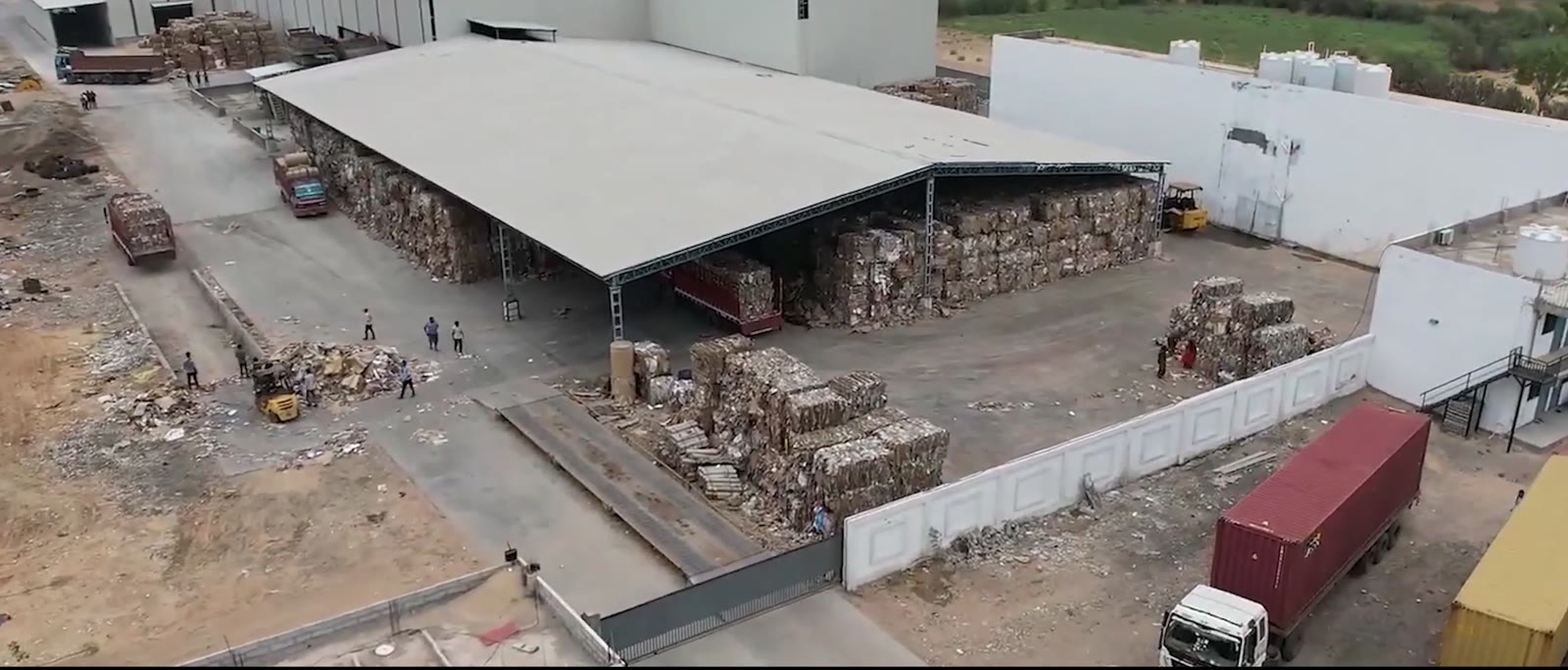
In India, waste paper travels from household and commercial bins and community bins to waste pickers and small scrap dealers, then to aggregators who segregate it by grade, remove contaminants and bale it. Paper mills buy the graded bales, pulp them, screen out plastic and grit, and make new kraft paper, board and other grades.
Key points
- Much of the collection is done by informal workers, including waste pickers and door-to-door scrap buyers.
- Aggregators add value by sorting paper into grades and baling it.
- Grade and contamination decide what a mill can make from the bale and what it will pay.
- A dependable buyer at the end of the chain keeps material flowing to recycling rather than landfill or burning.
- Mills also have to deal with rejects such as plastic and grit, which is part of the true cost of recycling.
How does waste paper get from the bin to a paper mill in India?
Through a chain of collectors and traders. Paper is picked up from bins or bought from homes and shops, sold upward to larger dealers, sorted and baled, then trucked to mills.
Bollant describes the chain feeding its mills as dustbin, community bin, rag picker, aggregator, segregation, mill. Each link existed before the company started buying; what was missing, in its account, was a buyer at the end that collectors could depend on (see waste to raw material). The steps, in order:
- Household and commercial bins. Newspapers, cartons, office paper and packaging are thrown out with other waste or kept aside to sell.
- Community bins and door-to-door buyers. Mixed waste goes to community bins; dry paper is often sold directly to door-to-door scrap buyers.
- Waste pickers. Waste pickers recover paper and board from bins, streets and dumps, and sell it by weight.
- Scrap dealers and aggregators. Small dealers buy from pickers and households; larger aggregators collect from many dealers, shops, offices and factories.
- Segregation and baling. Paper is sorted by grade, contaminants are removed, and material is pressed into bales.
- Mill. Bales are weighed, checked for grade and moisture, and fed to the pulper.
Prices are usually set per kilogram at each step, and each trader’s margin pays for collection, transport, sorting and storage. For small collectors with little working capital, prompt payment matters as much as price.
Commercial sources such as shops, warehouses, printing presses and box plants often sell directly to aggregators, and their material is usually cleaner and easier to grade than mixed household waste.
What are the main grades of recovered paper?
Recovered paper is traded by grade according to its fibre and contamination. Common grades are old corrugated containers, newspapers, mixed paper, white office paper and box-plant cuttings.
| Grade | What it contains | Typical use at a mill | Watch for |
|---|---|---|---|
| Old corrugated containers (OCC) | Used boxes and cartons | Kraft paper, kraft liner, flute | Tape, wax-coated and wet boxes |
| Box-plant and kraft cuttings | Clean trimmings from converters | Higher-strength kraft grades | Mixed-in printed or laminated trim |
| Old newspapers | Unsold and used newspapers | News-print and lighter grades | Ink load, glossy inserts |
| White office and record paper | Printer paper, files, notebooks | Lighter and white grades | Staples, plastic files, carbon paper |
| Mixed paper | Assorted household and office paper | Board middle layers, lower grades | Variable fibre, high contamination |
| Duplex and grey board waste | Folding cartons, board offcuts | Duplex board fillers and backs | Coatings, laminated cartons |
Grade names vary between traders and regions, and mills often set their own descriptions and limits. How Bollant’s mills sort incoming material is described in how recovered paper is graded.
What contaminants cause problems in recycled paper?
Plastic, metal, sand and grit, wet or food-soiled paper, wax, adhesives and laminated paper are the main problems. They reduce yield, damage equipment and cause holes, spots and breaks in the new paper.
- Plastic film, bags and tape: removed at the pulper and screens, but small pieces pass into the sheet.
- Metal and stones: staples, pins, wire and grit wear pumps and screens and must be cleaned out.
- Moisture: wet bales weigh more than their fibre content and can rot in storage, so mills check moisture and adjust payment.
- Food and organic waste: spoils fibre and adds odour and bacteria.
- Wax, hot-melt glue and labels: form stickies that deposit on machine clothing.
- Laminated and plastic-coated paper: the film does not pulp, and fibre recovery is low.
Separating paper from wet waste at source, at home or in the shop, does more for paper quality than any step further along the chain.
Why do grading and a dependable buyer matter?
Grading lets a mill hold its paper grades steady, and lets collectors earn more for cleaner material. A dependable buyer gives collectors a reason to keep sorting and supplying.
A mill that receives the same grade every week can keep its pulping, cleaning and refining settings steady, which shows up as consistent burst factor and fewer breaks in the reels you buy. Collectors, for their part, depend on selling regularly at a fair price; when prices or payments are unreliable, material is more likely to be dumped, burned or mixed. Bollant states that it buys recovered paper graded and pays reliably, so the people who collect it can count on the trade. The Pochampally mill revival case study describes connecting the mill to the company’s raw-material sourcing as part of bringing it back into production.
What does a paper mill do with the recovered paper it buys?
It turns the fibre into new paper and board. Bales are pulped with water, cleaned, refined, formed into a sheet, pressed, dried and reeled.
The full sequence is explained in how recycled kraft paper is made. At Bollant, recovered paper feeds two revived mills, Pochampally (60 tonnes a day) and Jeedimetla (100 tonnes a day), with a combined design capacity of around 160 tonnes a day (company-stated). They make brown kraft, deluxe and news-print grade paper, duplex board and kraft liner, used by other converters and by Bollant’s own lines; see paper mills.
What happens to the rejects a paper mill removes?
Rejects are the plastic, metal, grit and unusable fibre removed during pulping and cleaning. Responsible mills try to send them to another use rather than to a dump.
Bollant states four practices at its mills: plastic separated from recovered paper is sold for recycling; agricultural husk, a farm residue, fuels the boilers that raise steam for the paper machines; boiler ash goes to brick-making; and process water is treated and returned to the boiler loop. These are company-stated, and the company has not yet measured volumes or savings, so no figures are published. Its stated aim, that nothing arriving at a mill leaves as waste, is an aim rather than a measured result. Details are on resource efficiency.
What should buyers and suppliers of recycled paper ask?
Buyers of recycled paper should ask where the mill’s recovered paper comes from and how it is graded. Suppliers of waste paper should ask what grades and moisture the mill accepts and how payment works.
For buyers: ask which grades of recovered paper go into your grade, how incoming bales are checked, and how the mill handles a bad lot. The answers tell you more about consistency than a brochure. For collectors and aggregators: use the supplier enquiry, and ask for the mill’s grade descriptions, contamination and moisture limits, and payment terms in writing.
Frequently asked questions
Who collects waste paper in India?
Much of it is collected by informal workers: waste pickers, door-to-door scrap buyers and small scrap dealers. Larger aggregators then buy from them and from shops, offices and factories, and sell sorted, baled paper to mills.
What is OCC in paper recycling?
OCC stands for old corrugated containers, meaning used cardboard boxes. It contains long kraft fibre and is the main raw material for recycled kraft paper and kraft liner.
Why is waste paper sorted before recycling?
Different papers contain different fibres and contaminants. Sorting by grade lets a mill make consistent paper and lets collectors earn more for cleaner material.
Can wet or food-soiled paper be recycled?
Lightly damp paper can usually be recycled, but heavily wet or food-soiled paper spoils fibre and adds contamination. Keeping paper separate from wet waste at source helps the most.
Can laminated paper be recycled?
Only with difficulty. The plastic film does not pulp, so fibre recovery is low and many mills and collectors avoid it or pay less for it.
What happens to plastic removed at a paper mill?
It is separated at the pulper and screens. At Bollant mills, plastic separated from recovered paper is sold for recycling (company-stated).
How can I sell waste paper to Bollant?
Collectors and aggregators can use the supplier enquiry on the request-a-quote pages and describe the grades, volumes and location they can supply.
What is an aggregator in waste paper recycling?
An aggregator is a larger trader who buys recovered paper from many scrap dealers, waste pickers, shops and offices. Aggregators usually sort it by grade, remove contaminants, bale it and sell it to paper mills by the truckload.
Bollant Industries · Published 2026-11-15

