

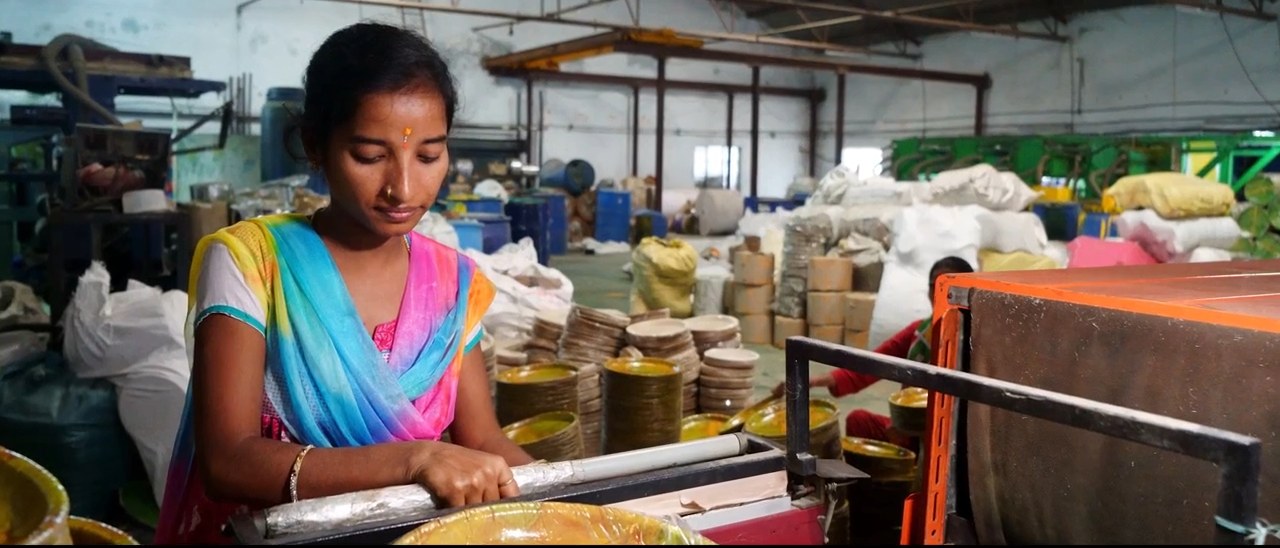
Where the plates are made
| Stage or unit | Figure |
|---|---|
| Nacharam packaging unit, Hyderabad (since 2012) | ~1.5 lakh plates a day, from 5,000 at start |
| Nizamabad unit (since 2014) | ~1.5 lakh units a day of disposable products, from 1 lakh |
| Plate sheets (two units) | ~3 lakh plate sheets a day |
| Punching (three units) | ~3 lakh paper plates a day |
The company does not publish which units make the plate sheets or do the punching, beyond the Nacharam plate unit and the Nizamabad disposables unit.
Own paper, own ink, own film
A Bollant paper plate is made from recycled paper produced at the company’s own Telangana mills. The paper is laminated and printed, then punched and pressed into shape on forming lines. The inks, adhesives and laminating films come from Bollant’s own units, and the lines are set up so tasks can be done by touch, sight or sound.
The range
Designer printed plates and bowls
Stock designs or your artwork
Buffet and thali plates
Large plates and compartment thalis
Bakery and breakfast plates
Small and medium, plain or fluted
Paper cups
Hot and cold drinks
Napkins and tissues
Plain or printed
Party tableware
Matching plates, cups and napkins
Laminated or uncoated
Start from the wettest, oiliest dish and how long it sits on the plate. Dry snacks, sweets and bakery items are usually fine on uncoated plates; gravies, curries and long buffets need a laminated plate or a separate bowl. Lamination keeps gravy in but means the plate is not compostable, even though its base paper is. See laminated vs uncoated paper plates.
Wholesale in Telangana
Bollant runs four distribution centres in Telangana. Wholesalers and distributors can apply through the distributor enquiry; territories are not published and private label is considered product by product. Pack counts for paper tableware and minimum quantities are confirmed per item at quotation.