

Address
Survey No. 206/207/208, Kapraipally, Bhoodan Pochampalle, Yadadri, Telangana 508111. This is Bollant Industries’ registered manufacturing address. For visits, contact the head office in Hyderabad first.
The mill in figures
| Measure | Figure |
|---|---|
| Makes | Recycled kraft paper |
| Design capacity | 60 tonnes a day |
| Capacity when taken on | 25 tonnes a day |
| Condition when taken on | Distressed and closed |
| Time to production | About 6 months (2017) |
| Site | 8.2 acres, about 50,000 sq ft of buildings |
Why a closed mill
By 2017 Bollant’s converting lines needed a steady supply of paper of a known grade, and the company needed more recycled kraft capacity close to Hyderabad. A new mill would have meant buying land, obtaining permissions and waiting through a long build. Its rule is to revive before it builds, and Pochampally was an existing mill with idle machinery, outstanding dues and no reliable supply of recovered paper.
The revival followed the method Bollant calls ARO. Assess: title, feasibility, the value of land and machinery and a manpower plan. Re-engineer: machinery that could be saved was kept and modified, PLC automation was added, lines were reorganised and the team trained. Optimise: the mill was tied to Bollant’s raw-material sourcing and to buyers for its output. The full story is in the Pochampally case study.
Where the kraft goes
Pochampally kraft goes to carton and box makers, tube and drum manufacturers and disposable-product converters, and to Bollant’s own converting lines, which wind it into cores and cones and convert it into boxes. GSM, burst factor and reel size are agreed per order in writing. Because the mill’s capacity is shared across grades, availability in a given month is confirmed at quotation.
At the mill
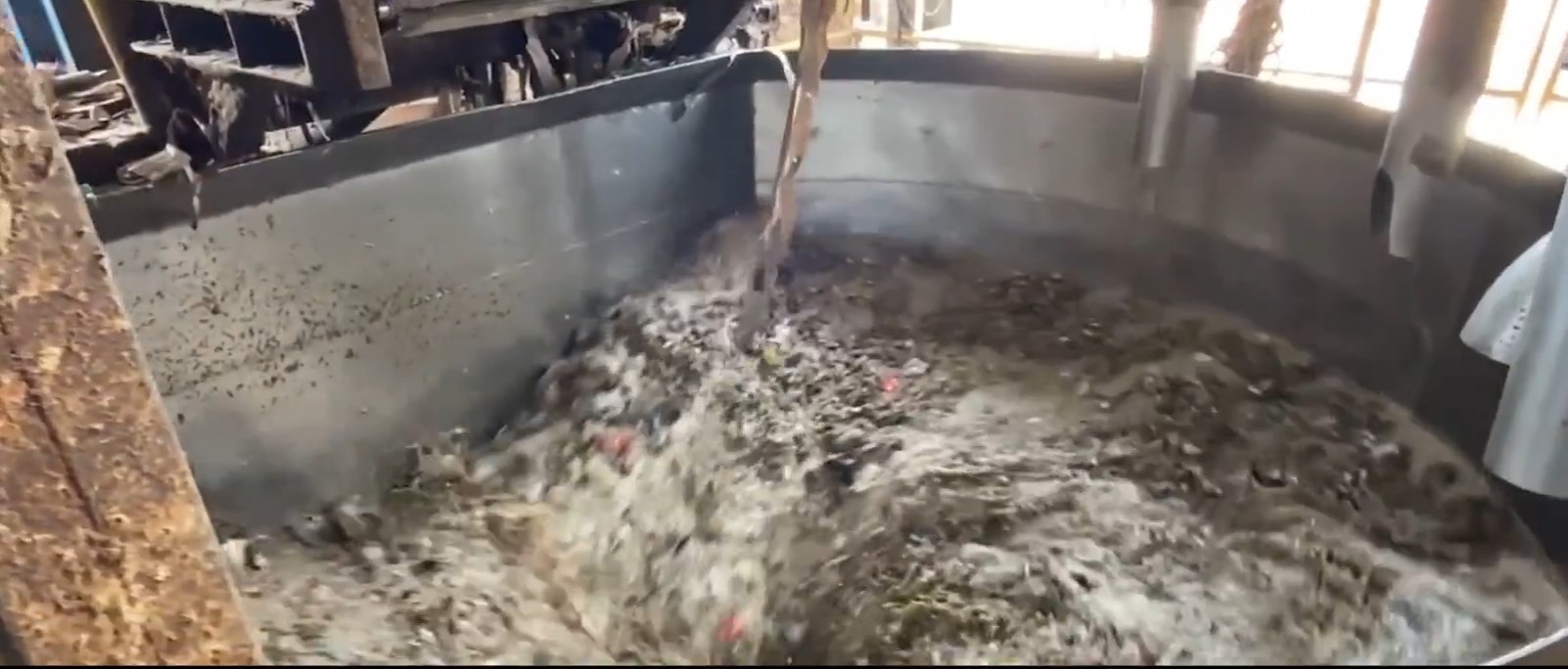
Recovered paper is graded, hydro-pulped, cleaned and refined, then formed, pressed and dried on PLC-controlled machines before it is reeled and cut. The company states that at its mills plastic separated from recovered paper is sold for recycling, husk fires the boilers, ash goes to brick-making and process water returns to the boiler loop; volumes are not yet measured. See resource efficiency.